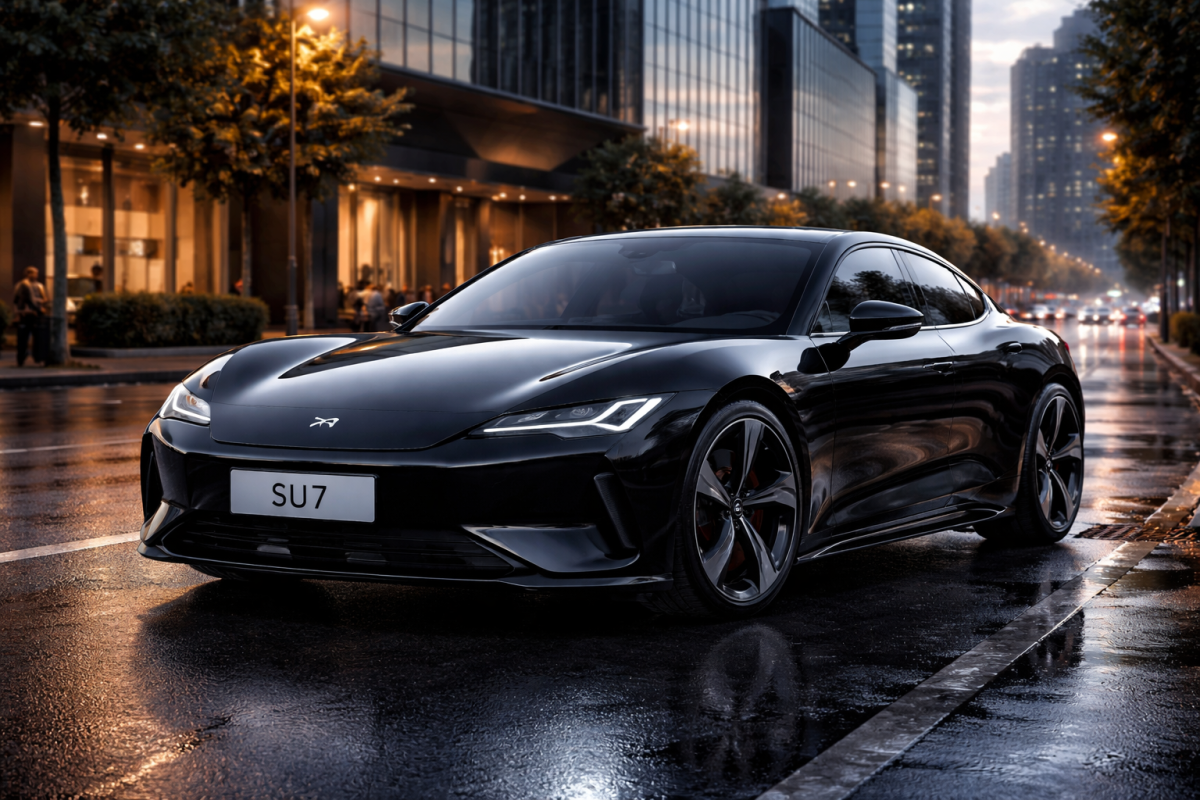
Since the early 2000s, China has specialized in electric vehicles, and since Canada and the U.S. were concerned that China could dominate the market, they imposed and have maintained 100% tariffs since 2024.
After Carney was elected, he agreed to an agreement with Chinese President Xi Jinping, lowering tariffs to 6.1% and agreeing to import 49,000 Chinese EVs each year. In exchange, China sharply reduced tariffs on agricultural products such as canola and eased restrictions on products such as lobster, peas, and crab.
So, there will be some brand-new cars coming in 2026 and 2027, like BYD and Xiaomi (yes, the same brand that created the phones), and they will be cheaper than a Tesla.
The Xiaomi SU7 costs around $41,000 for the base model and more for the Pro, Max, and Ultra models. The standard model has a 700 KM range, which is quite impressive, and a 0-100 KM/h in around 5.3 seconds. The ultra, the most high-end version, accelerates from 0-100 KM/h in just under 2 seconds and has a shorter range of around 630 KM, but is more focused on pure performance, not distance. The Max and Ultra models have very fast charging, more precisely 10 to 80 % in 11 to 20 minutes. Compared to a Tesla Model 3, which is $60,000, this is very impressive. Needless to say, some people are considering buying one for themselves.
The interior is pretty spacious with a futuristic design. There are many interesting features, but they can be overwhelming. The glovebox is huge and can even take in a 14-inch laptop. As for audio, there are 25 speakers all around the car for immersive sound. The seats are covered with alacantra, a soft, luxurious material that many find very comfortable. There are two buttons on the steering wheel: one activates self-driving, and the other, “Boost mode,” a mode for convenient acceleration.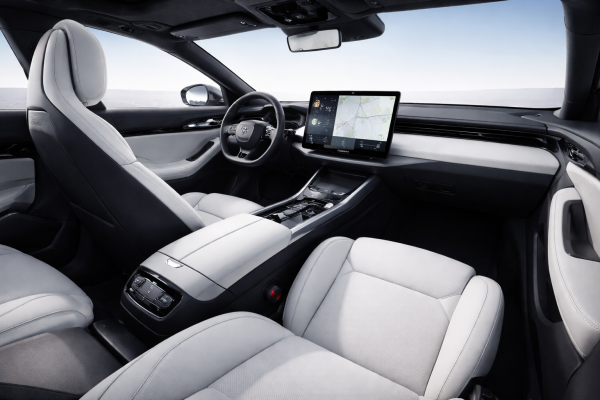
It has a 16.1-inch screen and uses the Xiaomi OS (operating system). It was built to work with tablets and phones from the same brand, providing a fast, smooth experience. It has screen pairing and even voice recognition, which can be used to open windows or make calls.
The software utilizes a Qualcomm Snapdragon 8295 chip (a fourth-generation computer chip specifically designed for an “in-car AI” system). The snapdragon supports 4K resolution. It features Wi-Fi 6 (the latest), Bluetooth 5.2, and 5G internet support.
The self-driving has an upgraded version that utilizes LIDAR sensors (A LIDAR sensor works by using light to measure distances), which are more accurate, but can be very expensive, starting at $24,500 USD($33,554 CAD).
Overall, it is a pretty solid car, and Marques Brownlee even said that it would “cook” the EVs already present in the U.S.