As previously mentioned in the first part of the story(https://camaradiant.com/27580/technology/creating-ai/), an AI is a fabricated intelligence designed for various purposes, such as creating photos or solving everyday problems. AI creation can be quite expensive, ranging from $5,000 for a simple AI to $50,000. In ChatGPT’s case, its third version, GPT-3, cost its company a few million dollars to develop. The first part was focused on preparation, whereas the second part is about training and improvement. Here is the last half of these steps.
The next step in this long process is called Hyperparameter Setup. It’s where the creator decides the setup of the AI, such as the learning rate(how fast it learns), the number of training Epochs(how many times it has access to the entirety of the dataset). It could even be regularization settings, where you prevent the artificial intelligence from memorizing too much information. You could think of it as launching a new video game; you open it, then adjust the settings to what you desire. It’s important because if the good settings are used, the AI will learn faster, be more accurate, and its learning will be more stable. On the contrary, bad settings could cause crashes or poor results.
Then there is Forward pass → loss → backprop → weight updates. This stage happens in 4 steps. In the first step, the machine makes a guess based on an image or sound it was given. After it calculates how wrong it was, it figures out how it was wrong. Basically, it tracks back through what it did to see where it made a mistake. Finally, it fixes itself if it was wrong by changing a weight(a number that affects its prediction) or if it was right, it strengthens the weight. This step could be repeated thousands or millions of times. Each small try can last a fraction of a second, but considering the number of times it has to do it, it can be pretty long.
For the ninth step, called evaluation & validation, the AI maker looks at how well the artificial intelligence is learning. In this step, it doesn’t learn anything new; it is being tested to verify how much it learned by giving it brand new information and seeing how well it predicts it. It goes with the previous step; training is like studying, and this step is the exam.
This next step can be used in previous places; it is called Checkpointing and Versioning. Checkpointing is like in a video game, the creator saves their progress so that if anything happens, like a crash, it won’t be all lost. What does it save? It stores different information, such as weights and other information, such as the learning rate. Versioning is also quite like a video game. There are different versions, it could be like 1.16.5 or a more familiar example, GPT-5, meaning that it is the fifth version of the AI. It is a very important step because if anything happens, the AI maker won’t lose weeks of progress.
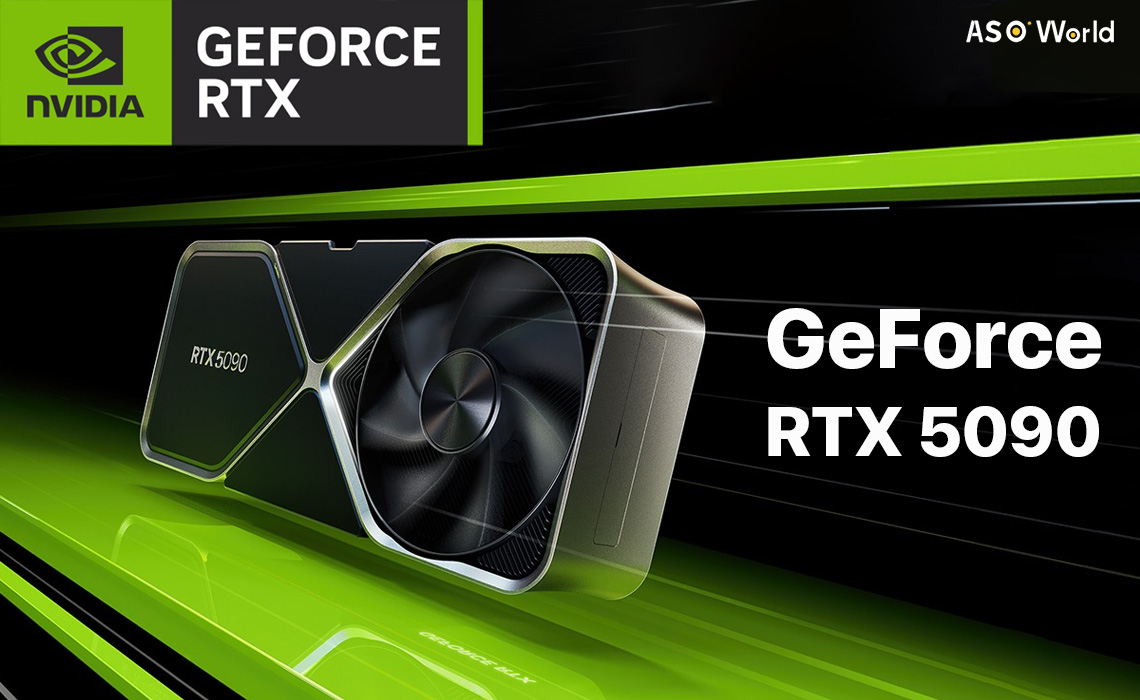
Fine-tuning, the step after, is an important part of the progress. This step must be after the previous steps because it modifies the weights that are already present. The most popular fine-tuning technique is called LoRA, short for Low-Rank Adaptation. It’s popular because it works fast on large models, and it uses less memory. The GPU, or graphics processing unit, has something called VRAM(Video Random Access Memory), and if too much is being used, it could slow down the process or even crash. It is used to define the AI (what it will do).
The final step is publishing. It can get released as an app or a website, whatever the creator wants, but in ChatGPT’s case, there is one last step called continuous learning. The AI continues to learn like it was previously doing to make it better.